
Break your dog’s bad jumping habit
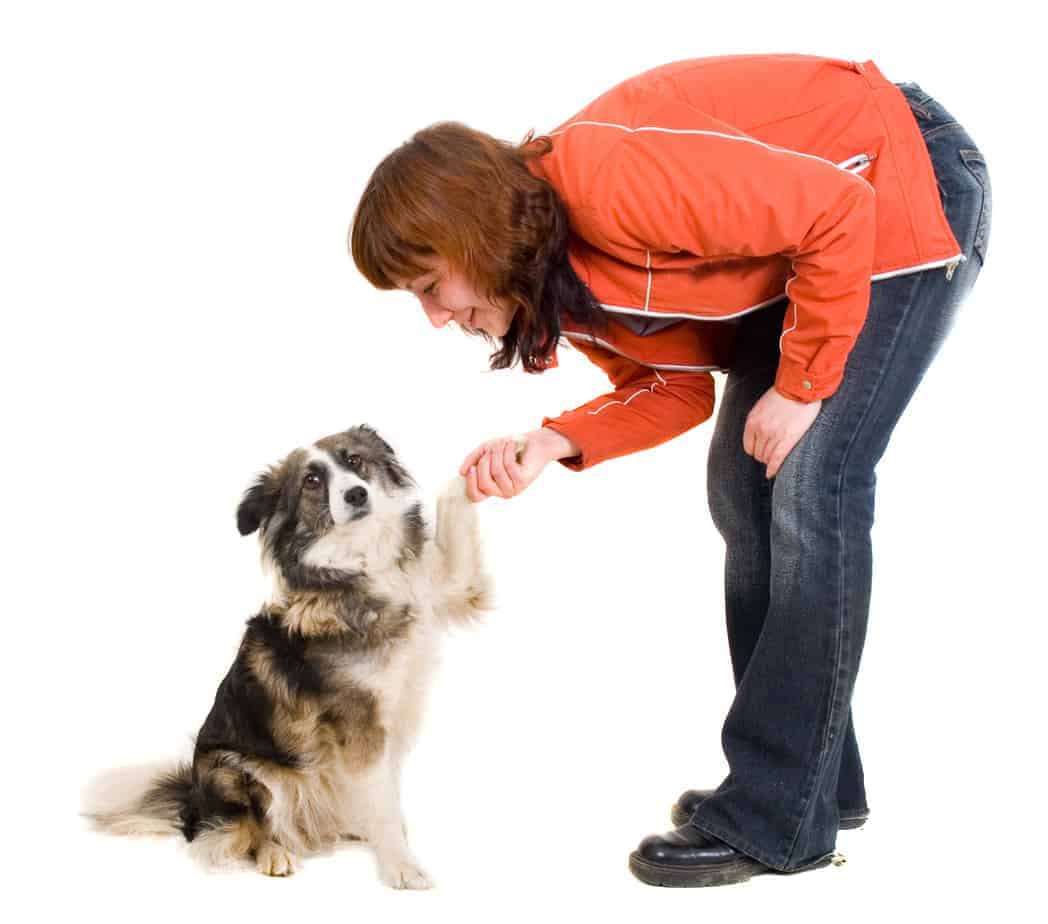
There are some reasons why dogs jump. Primarily they are happy when greeting people.
But the main reason dogs jump on people is because when they were puppies, people thought it was cute and encouraged it. Instead, humans should have rewarded calm behavior by bending down and playing with the pup.
As the dog gets older and more significant, the owner cannot understand why it is so hard to break the jumping habit. People, most unknowingly, rewarded inappropriate behavior, and then, want it to stop. That only confuses your dog.
Here is where positive reinforcement, punishment-free obedience training pays off. If your dog has been trained to “SIT-STAY” until you give a release command, all you will have to do is provide the “SIT-STAY” cue.
To please you, they will follow your command. A dog cannot sit and jump on someone at the same time! Once you have your dog under control with the “SIT-STAY” command, you should not have any problems either in the house or while walking your dog.
Now, to see why this is so confusing to them, let’s take a look at this “problem” from your dog’s point of view.
Understand your dog
First of all, you need to understand how dogs greet each other. They start off greeting face-to-face. To them, it is perfectly natural to want to jump up to greet you or your guest to greet face-to-face. However, it is up to you to teach your dog that it is unacceptable behavior to greet a human face-to-face. Humans, no matter who they are, are always Alpha.
Remember, that dog in your living room is genetically only a gene or two away from a wolf. Let’s take a look at how your dog sees this particular situation. You, the leader of your pack, have returned to the den (home), so, to a dog’s way of thinking, you have safely returned from “the hunt.”
Since they have no real concept of time, you may have only gone to the mailbox, but to them, you have returned to the den safely. First, they want to acknowledge your return, second, they want you to recognize them, and third, they want to know what tasty morsels you have brought back from the hunt. This excited behavior is perfectly normal for your dog.
As Alpha, you must maintain your leadership position in the pack. Alpha only acknowledges pack members when they choose. You must teach your dog, they will be recognized, but only when they are calm. If they jump up to greet you, ignore them, turn your back to them, and walk away. Don’t reward jumping.
Cue your dog to “SIT” in their “special spot.” Designate a particular area for this action. A sitting dog cannot sit and jump at the same time. IMMEDIATELY, when their tail hits the floor, calmly acknowledge them. Do not make the mistake of getting them excited. Bend down, and let them know they are good dogs! That is their reward.
Visitors to the den
The doorbell rings. Your dog gets excited and starts barking. They know someone is on the other side of the door. Is it a friend or an intruder? You calmly open the door; meanwhile, your dog is reading your body language and tone of voice. Your dog notes you, “The Boss” look and sound relaxed…this must be a friend.”
In walks your friend. The dog recognizes this person as a friend. You greet your friend. To your dog’s way of thinking, they too must be a good host and welcome “our” friend to the pack, face-to-face. Since they are much shorter, your dog is thinking, “Oops! Looks like they didn’t see me. I’ll have to jump up so that they can see me.”
Unknowingly, your friend encourages and rewards the unacceptable behavior by acknowledging the jumping dog. Big mistake! They are rewarding unacceptable behavior. Dogs should never be recognized until they are calm, and all four paws are on the floor.
Before involving other people, teach your dog to go to a “special spot” and to “SIT-STAY” as you open the door. If they move, return them to the spot, give the command once again. Repeat this as often as necessary. Your dog should retreat to their spot, sit, and stay, as you open the door.
Break dog jumping habit: 6 steps to prepare your guests
1. Inform your friends that you are training your dog not to jump up on people.
2. Tell them you need their cooperation as “guests” during this training period.
3. Inform them; your dog must learn not to jump when greeting people, and ask them to refrain from acknowledging the dog when it is jumping.
4. Ask your friend to turn their back to the dog when they enter the house if your dog starts to jump. If your dog is sitting calmly with all four paws on the floor, have your friend calmly acknowledge the dog.
5. If the dog continues to jump, ask your guest to turn their back, ignore the dog and calmly walk back out the door.
6. You will need to step in, get your dog under control, return them to their special spot, and give the ‘SIT-STAY” command until you believe they are ready to greet your guest calmly.
Break dog jumping habit: 6 steps to train your dog
1. Having your friend ring the bell or knock on the door.
2. Now, it is your job to get your dog under control. Give your dog the ‘SIT-STAY” cue, and have them retreat to their “special spot.” Remember, they cannot jump if they are sitting!
3. Open the door and greet your guest. Your dog should remain in the ‘SIT-STAY’ position.
4. If they don’t, if they jump on your guest, give the “OFF!” command, have your guest ignore the dog, turn their back to the dog, and leave. You must return your dog to their special spot, and place them in the ‘SIT-STAY” position and repeat the exercise.
5. Instruct your friend to acknowledge the dog only when the dog is calm calmly, and all four paws are on the ground.
6. Repeat the exercise until your dog makes the association…”When I am calm, I am acknowledged!”
This is a hard behavior to change, but it can be done. It may take a minute, it may take five minutes, it may take an hour, but the reward of acknowledgment is only to be given when the dog is calm, with all four paws on the floor.
Out and about
Socialization is key to desensitizing your dog to new experiences, people, and other dogs. It is through socialization your dog learns how to greet people and other dogs appropriately.
Get out more. Take your dog to places where there are new people to meet. Enroll in positive reinforcement, punishment-free Puppy Kindergarten, or obedience class. Encourage your dog to greet people calmly. If they appear too excited, turn around, walk back a few steps, turn and make the approach again. Repeat as necessary. Praise and reward him when he calmly greets the stranger or another dog. Explain if necessary, you are training your dog. Many people are more than willing to help you if invited.
Break dog jumping habit: Bottom line
During training, being fair, firm, and consistent is essential. Do not encourage jumping games, or tap your shoulder for your dog to jump up on you, until your dog is entirely obedience trained and under control at all times. Your dog should have an “on” and “off” button if you insist on letting them jump up on you.
Karen A. Soukiasian is the owner of Good Dog! — Dog Training in St. Augustine, Florida. You can follow Karen on Facebook.