
Aggressive puppy or normal play? Spot the danger signs and fix problems
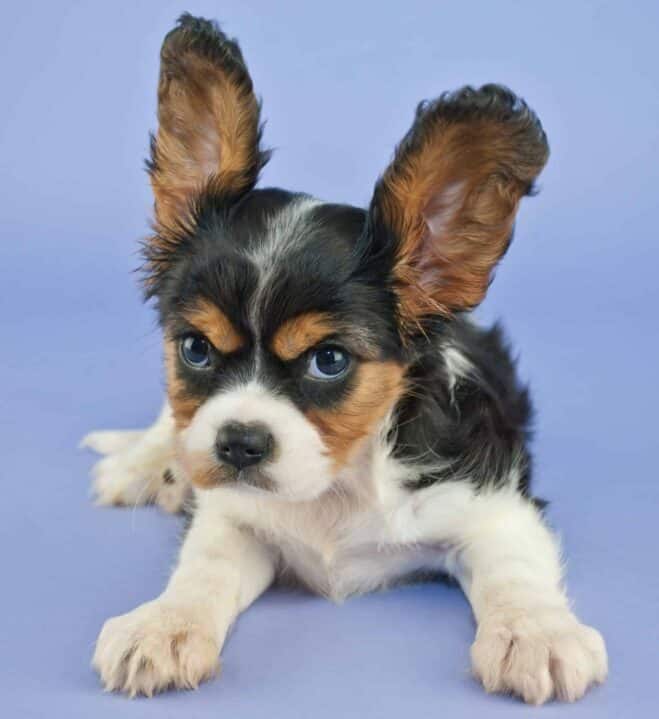
Getting a new puppy is one of life’s great joys. There’s a fluffy new family member to cuddle, fuss over, and fall completely in love with. For kids, it’s even better: they’ve got a built-in playmate.
But here’s something worth watching from day one. Some puppies show early warning signs that deserve attention, not panic, but a clear-eyed look at what’s happening and why.
It’s completely normal to feel concerned if your puppy’s behavior seems off. The good news? Most challenges are workable. Every puppy tests limits. It’s part of growing up. With patience, consistency, and the right guidance, even tricky behaviors can turn around.
So how do you know when you’re dealing with normal puppy energy and when something needs a closer look? That’s what this guide is for. Start with a quick check of your puppy’s body language, since that’s where most of the clues live.
You’ll want to know whether you can manage your puppy’s behavior yourself, or whether this pup might need professional support. That’s not a failure. That’s being a responsible pet parent.
And never brush off behavior that worries you. Without help, dog behavior issues left unchecked tend to grow rather than disappear.
Any breed can produce an aggressive puppy
- Any breed can produce an aggressive puppy
- Play vs. aggression: A quick visual guide
- Teething, nipping, and biting
- Cope with puppy teething
- How to stop a puppy from nipping
- How to stop a puppy from biting
- Use socialization to mitigate potential aggression
- Use positive reinforcement
- Recognize fear and anxiety early
- Don't wait if you spot aggressive puppy warning signs
- Aggression caused by illness
- Get help
- Training approaches that work
- Create a safe environment
- Frequently asked questions
- Keep going
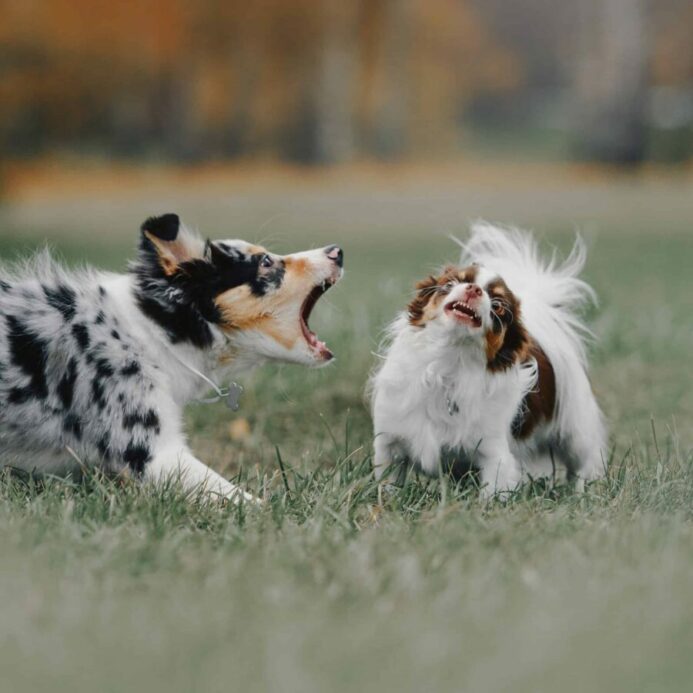
Aggression isn’t a breed thing. Gentle dogs and difficult dogs show up in every breed, full stop. That means no wishful thinking, and no assuming your pup will just “grow out of it.”
The moment you notice something concerning, act. Redirect your puppy toward better behavior immediately. The longer you wait, the harder it gets.
Here’s what to do first: visit your veterinarian. Rule out medical, genetic, or neurological factors before anything else. A vet is your starting point, not a last resort.
Younger puppies respond faster to behavior change. If you’re working with a puppy, you’ve got timing on your side. Fear and separation anxiety are common roots of aggression. Punishment-free, positive reinforcement training helps your pup feel safe, and a calm puppy is rarely an aggressive one.
Think of socialization like early childhood education. The more your puppy learns now, the easier everything gets later. Start with basic commands and potty training. Puppies that know what’s expected of them are more confident, and confident puppies are less likely to act out.
So what are the actual warning signs? Keep an eye out for:
- Biting that doesn’t stop
- Constant barking
- Possessiveness over toys or food (resource guarding)
- Unusually high prey drive
- Dominant behavior with other dogs
- Hyper biting in the evenings
Watch your puppy near food and toys especially. Does your puppy growl or snap when approached at the bowl? Snatch treats from your hand? Guard furniture or the trash? These can be early signs of resource guarding, which is worth addressing right away.
How does your puppy react when a stranger walks in? What about an unfamiliar child? Does your puppy bark excessively or freeze up?
Also watch for unwillingness to be touched, especially when you pick the puppy up. Nipping that turns into biting your hands is a pattern to break early. And watch how your pup interacts with other dogs: signs of a dominant puppy showing up in play should be redirected with calm, consistent training.
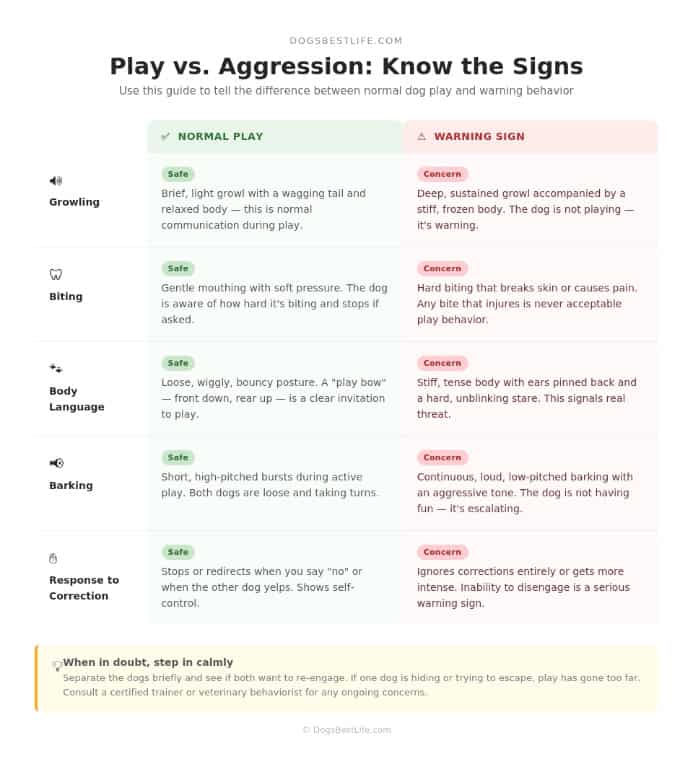
Play vs. aggression: A quick visual guide
Not sure if your puppy is playing or escalating? This table gives you a fast side-by-side comparison. The key is looking at the whole picture, not just one behavior in isolation.
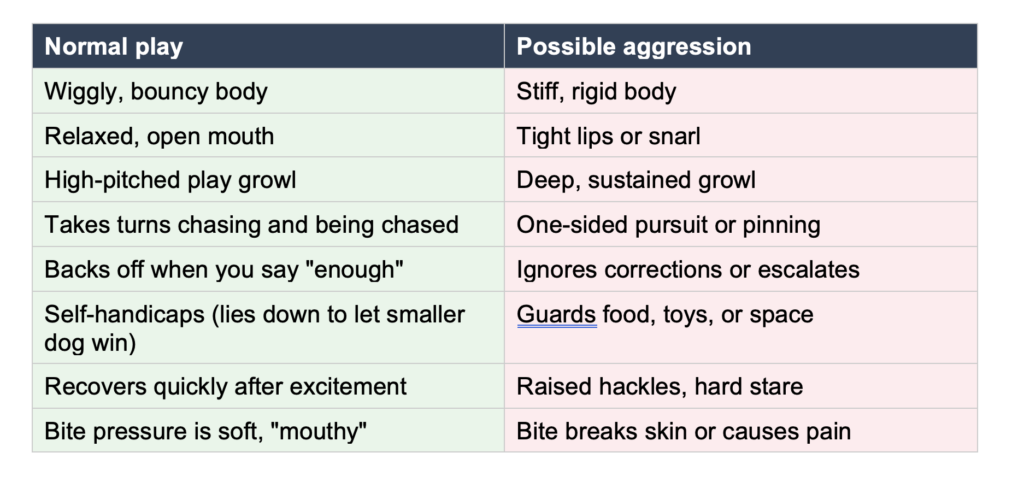
If you’re seeing several “possible aggression” signs together, that’s your cue to get professional eyes on the situation.
Teething, nipping, and biting
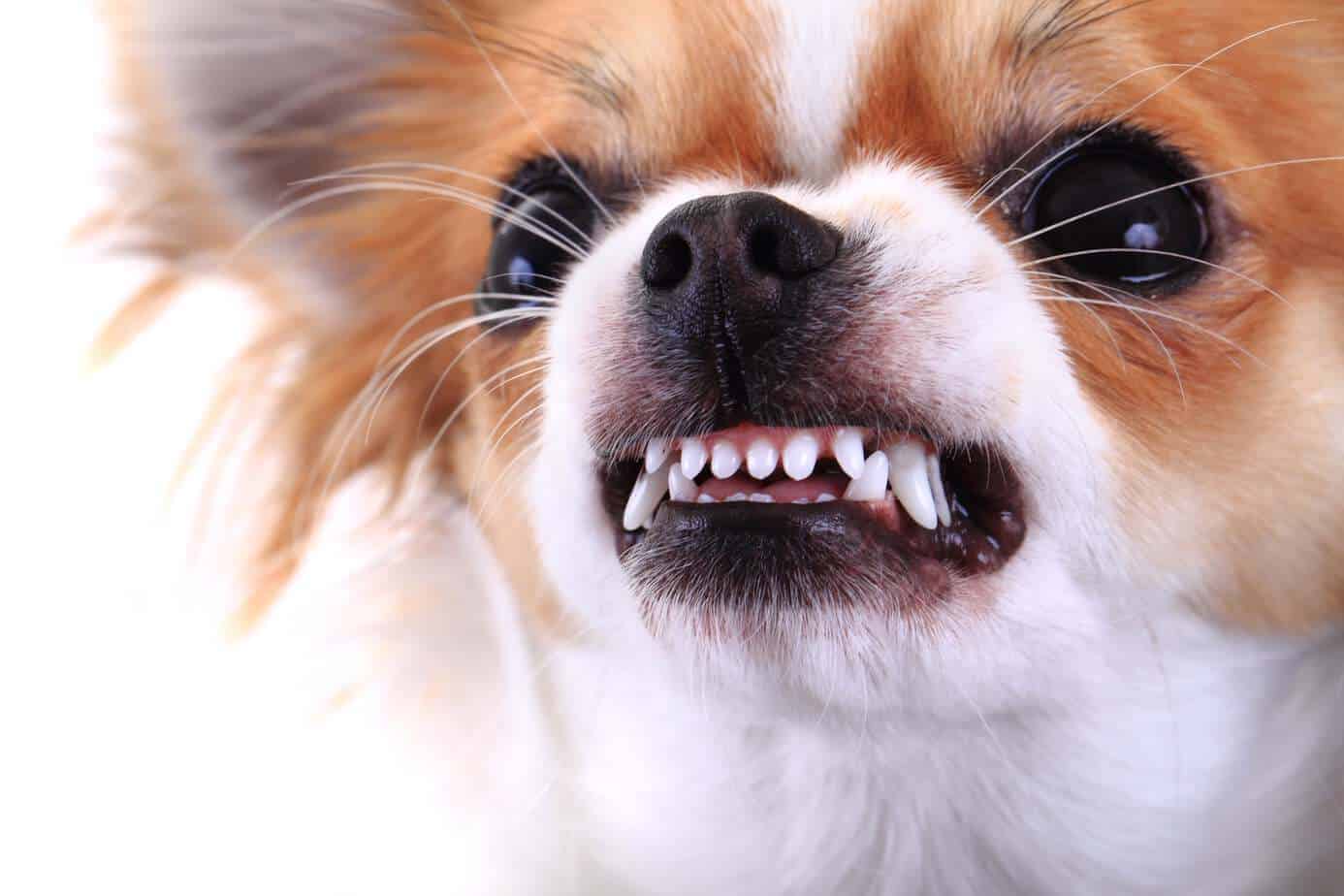
Know the difference between puppy teething, puppy nipping, and puppy biting. Start training a puppy early so it learns not to bite. Biting training is essential to having a well-behaved dog.
Most puppies learn bite inhibition from their parents, siblings, or littermates. But you must teach them how to control their bites if they haven’t. Puppy teeth can be needle-sharp compared to adult teeth.
If your puppy does not receive proper training to refrain from biting from an early stage of development, you may get into trouble.
According to dog bite laws, owners are liable for dog bites in some states regardless of the owner’s previous knowledge of the dog’s tendency to bite.
Even if your puppy does not know better yet, you do not want to learn the average payout for a dog bite from personal experience in a courtroom or an attorney’s office.
Indeed, any dog’s intentional provocation will most likely excuse a dog owner’s liability, even in those states with strict liability laws. However, since you are responsible if your dog bites, it is best to prevent that behavior.
The situation becomes more complicated if your dog bites a child or if the bite leads to cuts, lacerations, ligament and tendon damage, and so on.
In other words, teaching your puppy to stop biting is a crucial responsibility for the greater good of others and your (legal) peace of mind.
Cope with puppy teething
Teething hurts. Puppies chew to feel better. That’s not aggression; it’s pain relief. Give your pup appropriate chew toys or teething toys and redirect when they go for you.
If your teething pup tries biting you, respond calmly but clearly.
Turn your back, step away, or make a sharp “ow” sound. You’re teaching a lesson: biting ends playtime.
Consistency here makes all the difference.
How to stop a puppy from nipping
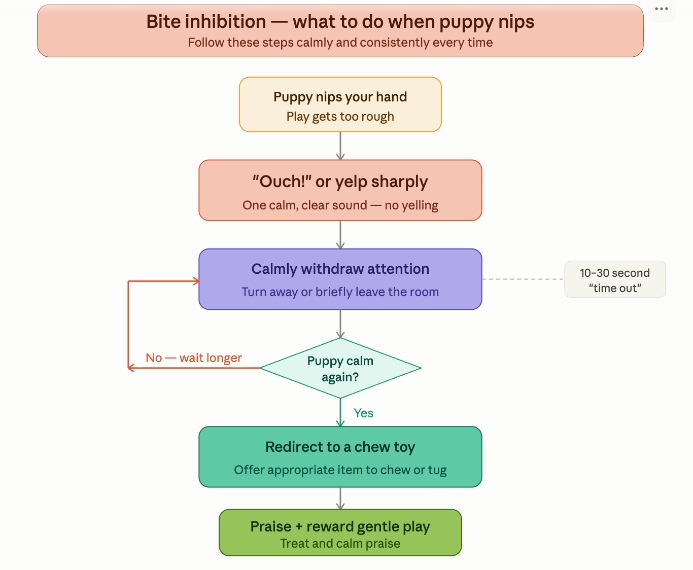
Playful nipping is normal up to about 15 weeks. After that, teeth on skin shouldn’t be happening. Puppy teeth are razor-sharp, and what’s cute at eight weeks isn’t cute at six months.
When nipping happens: stop all play and walk away. Don’t yell, don’t push the puppy, just go quiet and leave. Your puppy learns fast that rough behavior makes the fun stop.
Avoid rough games like tug-of-war until your pup has solid bite manners. And skip play biting altogether; it only blurs the lines.
Never hit a puppy that bites. And don’t bite back. Neither works, and both can damage trust and make things worse.
How to stop a puppy from biting
If your puppy bites every time you touch it, that’s a serious sign. A puppy with no bite inhibition won’t distinguish between you and a child. That’s a safety issue, full stop.
Biting that breaks the skin, biting that’s accompanied by a snarl, or biting at faces, all of these require immediate action. Don’t wait.
This is where a positive reinforcement trainer can help enormously. A professional using fear-free, force-free methods can assess what’s driving the behavior and give you a real plan. If you’re asking yourself what else you can try, that’s your sign to bring in support.
It’s important to know that you’re not alone. Many puppy parents face exactly this and come out the other side with a happy, well-adjusted dog. Start with your vet, always.
Use socialization to mitigate potential aggression
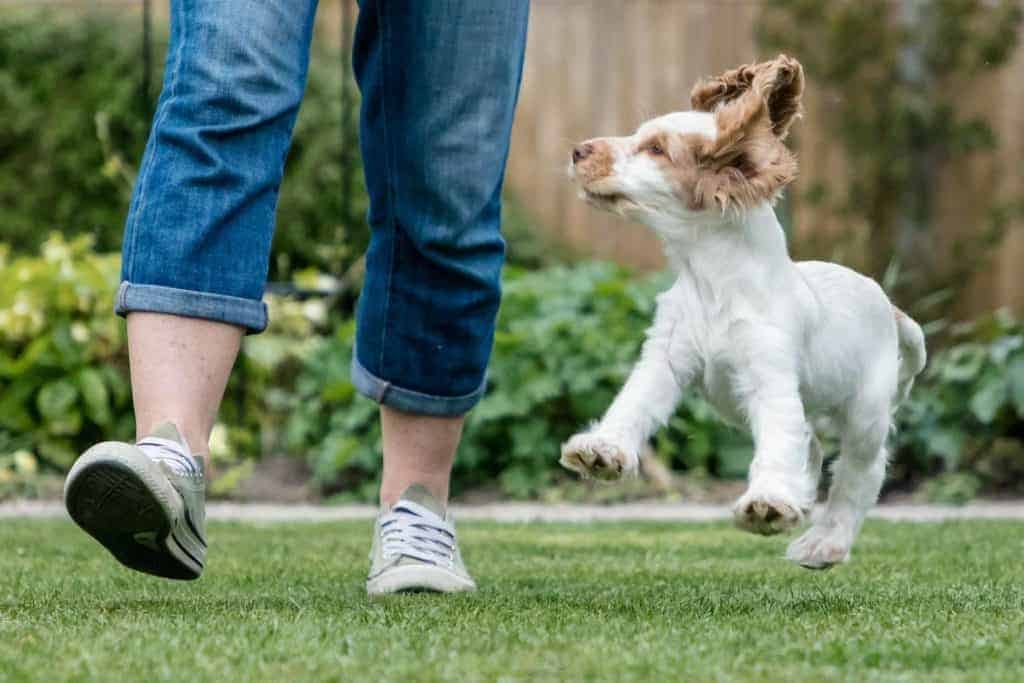
Socializing your puppy is one of the most powerful ways to prevent aggression. The critical window is roughly 3 to 14 weeks, so start early.
During this time, introduce your puppy to different people, animals, sounds, and environments. Keep experiences positive. Praise calm behavior. Use treats generously.
Group training classes are gold here. They provide structured, supervised socialization with built-in guidance.
Consistency matters too: the more varied, positive experiences your pup has now, the more resilient they’ll be later.
Think of it this way: socialization is your puppy’s emotional education. Don’t skip it.
Use positive reinforcement

Positive reinforcement is the gold standard for reducing aggression. It works because it builds trust while shaping behavior. Punishment, on the other hand, can increase anxiety and make aggression worse.
Start by spotting your puppy’s triggers. When your pup stays calm in a tricky situation, reward immediately with praise, a treat, or a toy. Keep training sessions short and upbeat.
When your puppy gets reactive, redirect to a toy or a command rather than correcting harshly. Help them succeed.
That’s the LIMA principle at work: Least Intrusive, Minimally Aversive. You’re solving the problem without creating new ones.
Introduce your puppy to new people gradually, rewarding calm responses. A nervous or anxious dog needs help building coping skills so that anxiety doesn’t flip into aggression.
Recognize fear and anxiety early
Fear and anxiety often sit underneath aggression. If you don’t help your puppy develop real coping skills, that anxiety will find an outlet.
Watch for: cowering, whining, hiding, flattened ears, a tucked tail, or a tense and frozen body. Notice what triggers these reactions. Loud noises? Sudden movements? New people? Knowing the triggers is the first step to helping.
Create a safe retreat space where your pup can decompress. Use gradual exposure paired with positive reinforcement to build confidence. Never use physical punishment to address fear. It doesn’t work, and it makes things worse.
Regular exercise, mental stimulation, and predictable routines all help a fearful puppy feel safer.
Avoiding physical punishment is essential, as it can exacerbate fear and anxiety. Instead, focus on reinforcing calm behavior with treats and praise.
Socialization, regular exercise, and mental stimulation can further alleviate symptoms, helping your puppy feel more secure and relaxed in its environment.
Don’t wait if you spot aggressive puppy warning signs
Early action makes everything easier. Puppies are still forming their understanding of the world, and behaviors that aren’t addressed now get harder to shift later.
Growling, snapping, or biting that goes unchecked doesn’t plateau. It tends to escalate. And escalating aggression creates real risks for the people and animals around your puppy, and for the puppy itself.
Puppies with unmanaged aggression are far more likely to be rehomed or worse. That’s a heartbreaking outcome you can help prevent.
Early intervention can look like positive reinforcement training, structured socialization, and working with a professional. These aren’t big scary steps. They’re just smart ones.
Aggression caused by illness
Sometimes behavior changes aren’t about temperament at all. They’re medical.
Your vet should rule out underlying health issues whenever aggression appears suddenly or without obvious cause. Pain is one of the most common hidden triggers for aggression in dogs of any age.
Rage syndrome is a rare but real condition worth knowing about. It causes sudden, unprovoked aggressive outbursts, with no warning and no apparent trigger.
While any breed can be affected, it’s been documented frequently in English Springer Spaniels, giving rise to the term “Springer rage.” Anticonvulsant medications like phenobarbital can help manage it.
Partial complex seizures, which involve abnormal electrical activity in the brain’s temporal lobe, can also trigger aggressive episodes. If your dog’s behavior doesn’t fit any pattern, talk to your vet about neurological screening.
Track any behavior changes and share them with your vet. If aggression becomes unmanageable and poses a genuine danger, difficult conversations about quality of life may be necessary.
Get help
You don’t have to figure this out alone. These organizations and resources are worth knowing:
American Kennel Club
The AKC provides a wealth of information on dog behavior, training classes, and community resources. They often host events and seminars focused on responsible dog ownership and dealing with behavioral issues.
The Association of Professional Dog Trainers
This organization is dedicated to promoting professional dog training and behavior. Its website offers a directory of certified trainers specializing in behavioral issues, including aggression, as well as articles and tips for owners struggling with aggressive behavior.
The Humane Society of the United States
The Humane Society provides resources on training, behavior modification, and understanding dog aggression. It also conducts workshops and community outreach programs to help dog owners manage aggression.
Dog Trainers Network
This network connects dog owners with qualified trainers who can help address aggressive behavior through positive reinforcement. They emphasize force-free training methods that build trust and understanding between the owner and puppy.
Local animal shelters and rescue groups
Many animal shelters and rescue organizations offer training programs or can recommend local trainers experienced in handling aggressive puppies. They may also provide behavioral assessments and support groups for owners.
Online communities and forums
Websites like Reddit, Facebook groups, and specialized dog training forums allow pet owners to connect, share experiences, and seek advice from others dealing with similar challenges. These platforms can provide emotional support and practical tips.
Veterinary behaviorist
A board-certified veterinary behaviorist is the highest level of support for complex cases. They can offer detailed assessments, medical interventions if needed, and tailored training plans.
Reaching out for help is a sign of commitment, not weakness. These resources exist because raising a puppy takes a village.
By contacting these organizations, puppy owners can gain the knowledge and tools necessary to address aggressive behavior effectively.
Reaching out for help is a sign of commitment and care—remember, seeking guidance is a strength, not a weakness.
Training approaches that work
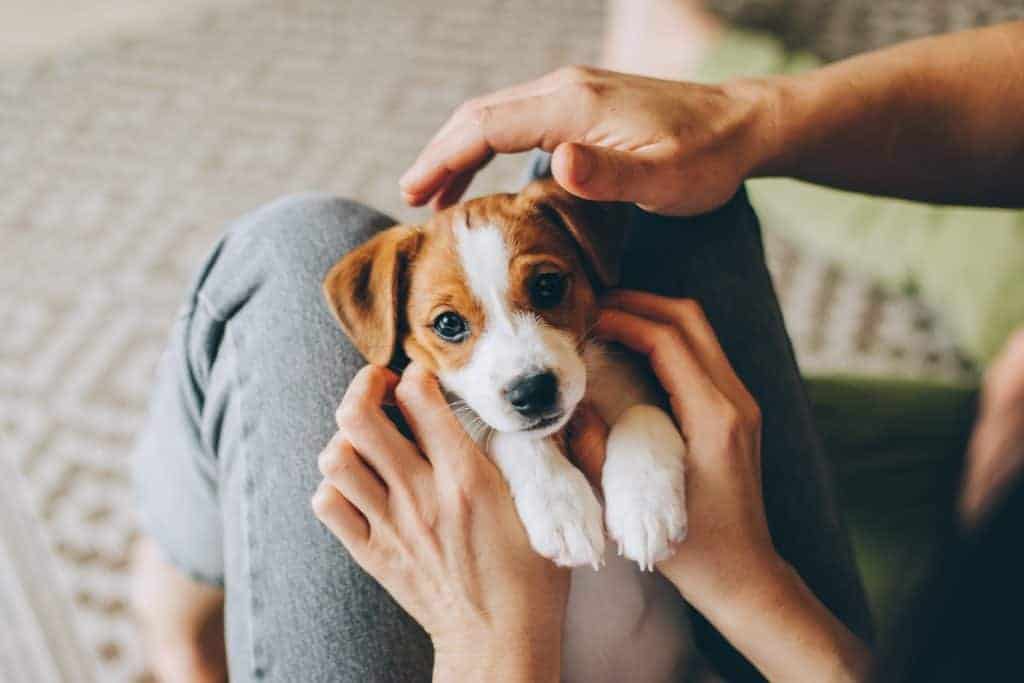
Not all training methods are equal. Here’s a quick overview aligned with modern fear-free and LIMA principles:
Positive reinforcement: Reward desired behavior immediately. Build a trusting relationship. Reduce anxiety over time.
This is the most effective and compassionate approach for addressing aggression.
Desensitization and counter-conditioning: Gradually expose your puppy to triggers in a safe, controlled way while pairing the trigger with something positive. This approach works especially well for fear-based aggression.
Redirection and management: When aggression flares, redirect to a toy or command. Use physical management (leashes, baby gates, separate spaces) to keep everyone safe while you work on behavior change. Management isn’t a fix, but it prevents rehearsal of the problem behavior.
What to avoid: Aversion-based methods, prong collars, alpha rolls, and punishment-based corrections can suppress warning signs without addressing the underlying cause. They often increase anxiety and erode trust, which can make aggression worse, not better.
Socialization workshops and group classes round it all out. Puppies learn from each other, and structured settings give you professional eyes on your puppy’s behavior in real time.
Create a safe environment

Your home setup matters more than you might think. A few practical steps can dramatically reduce your puppy’s stress and yours.
Give your puppy a safe space: A crate or quiet corner where they can retreat when they’re overwhelmed. Don’t use this space for punishment.
Stick to a routine: Predictable feeding, play, and sleep times reduce anxiety and create a sense of security.
Teach basic commands: “Sit,” “stay,” and “leave it” give you tools to manage behavior before it escalates. Trained dogs feel more secure because they understand what’s expected.
Avoid known triggers: Until your puppy has better coping skills, manage their environment to prevent situations you know will set them off. Gradual, positive exposure is the goal, not sink-or-swim.
Watch for overstimulation too. A puppy that can’t wind down needs help, not more excitement. And make sure your puppy gets enough sleep. Tired, hungry puppies are more reactive, just like tired, hungry toddlers.
If you feel overwhelmed, take a breath. You’re not failing. Raising a puppy is genuinely hard sometimes. Support is available, and you’re doing right by your dog just by paying attention.
Frequently asked questions
Is my puppy aggressive or just playing?
Playful puppies have loose, wiggly bodies, relaxed faces, and back off when you say enough. Aggressive puppies show stiff bodies, hard stares, raised hackles, and may guard resources.
Context matters: if your puppy is guarding food, toys, or space, that’s worth taking seriously.
Still unsure? Consult a professional. It’s always better to check than to guess.
Why does my puppy growl during play? Is that normal?
Yes, puppy growling during play is very common and is usually nothing to worry about. Play growls are typically higher-pitched and mixed with bouncy movements.
Puppies use growling to communicate excitement and boundaries. However, if the growling is deep, accompanied by snapping, or your puppy appears tense or fearful, step in to redirect the behavior and watch for escalation.
When is puppy biting dangerous and requires intervention?
Puppy nipping is a normal part of development, but when puppy biting is dangerous, it typically involves bites that break the skin, repeated biting that doesn’t respond to redirection, or biting accompanied by aggressive body language, such as a stiff posture or growling outside of play.
If your puppy bites forcefully or seems to target faces or vulnerable areas, it’s time to consult a trainer or your veterinarian.
Can aggressive behavior be fully corrected?
Many cases of puppy aggression can be significantly improved or even resolved with early, consistent training, socialization, and professional support.
However, outcomes depend on the cause of aggression (such as fear, genetics, or medical issues).
The earlier you intervene, the better the chances of raising a well-adjusted dog. Some severe cases may require lifelong management.
How soon should I start socializing and training my puppy?
Start as soon as your puppy comes home—ideally between 8 and 14 weeks old. Early socialization and training are critical for preventing behavior problems, including aggression.
Gradually introduce your puppy to new people, places, and experiences, and focus on positive reinforcement to build confidence and trust.
The sooner you begin, the easier it is to shape good habits and prevent issues down the road.
Always monitor social interactions to keep your puppy safe.
Keep going
These warning signs and suggestions are a starting point, not an exhaustive checklist. Know what’s normal for your pup, and pay attention when something changes.
Remember that puppies, like toddlers, have hard moments during the day. Hungry, tired, or overstimulated puppies act out. That’s not a personality flaw; it’s a signal.
Make sure your puppy gets enough exercise, mental stimulation, and sleep.
If you’re worried, act. Bring your puppy to the vet. Work with a force-free trainer. Don’t pass the problem on by surrendering your dog to a shelter.
Do the hard thing, because the payoff is a dog your family will truly love.
No puppy is perfect from day one.
Celebrate every small win. Progress is real, even when it’s slow.
Karen A. Soukiasian owns Good Dog! — Dog Training in St. Augustine, Florida. You can follow Karen on Facebook.