
Canine body language: What’s your dog saying with his paws?
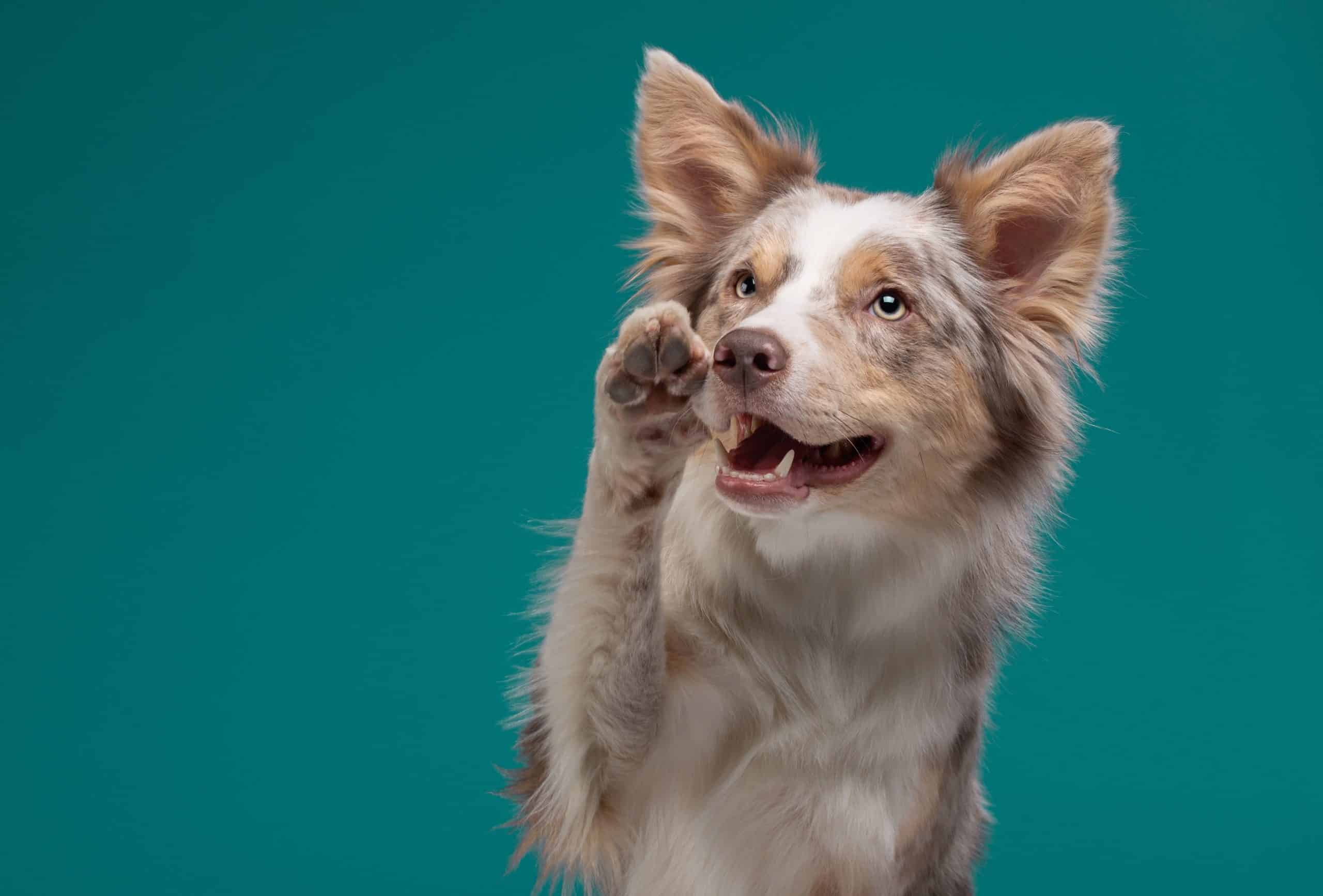
Pawing is one of the most vital canine communication tools.
What does dog pawing mean? Most new, inexperienced pet parents may wonder, “What’s my dog saying with his paws?”
You need to understand that dog is a simple language to learn.
When you understand it, you know your pet uses signs and body language to communicate information. Dogs also use facial expressions, licking, tail positions, and barking to communicate.
Too much pawing is one of the most common complaints by dog owners.
Many tired pet owners are upset because their pet’s sharp claws cause pain. This is especially true for those with new puppies or spoiled adult dogs.
These owners don’t know how to handle the situation and seek help.
Learn to understand pawing
- Learn to understand pawing
- Universal canine body language
- Recognize what pawing means
- Train your dog to stop dog pawing
- Training tips to stop pawing
- Use commands to stop bad behavior
- Focus on positive reinforcement
- Dogs that love to paw (and dig)
- Prevent excessive pawing
- Bottom line on excessive pawing
Pay attention to your pet’s sign and canine body language.
Focusing lets you quickly learn what your dog’s body postures mean. Learn canine communication to understand better what your puppy or dog is trying to tell you.
People often wonder what pawing means and why dogs put their paws on them. The truth is, there are several reasons why our canine friends paw us.
We need to recognize canine communication signals to understand what dogs are trying to tell us.
Dog pawing behavior is a natural and inherent way for your puppy or adult dog to get you to “focus” on them. Depending on how often your dog resorts to this method, it can be an acceptable or annoying habit.
Pawing communicates, “Hey, you up there, it’s me down here. I want your attention, and I want it NOW!”
You create a behavioral issue if you continuously give your dog attention each time he puts his paws on or digs at you.
You don’t want to create a situation where your dog keeps pawing at you to get your attention.
If your dog is insistent, avoid eye contact. Teach your dog that behavior is unacceptable.
Knowing when, where, and how often to respond or ignore dog pawing behavior can curtail that demand before it becomes a problem that requires behavior modification.
Universal canine body language
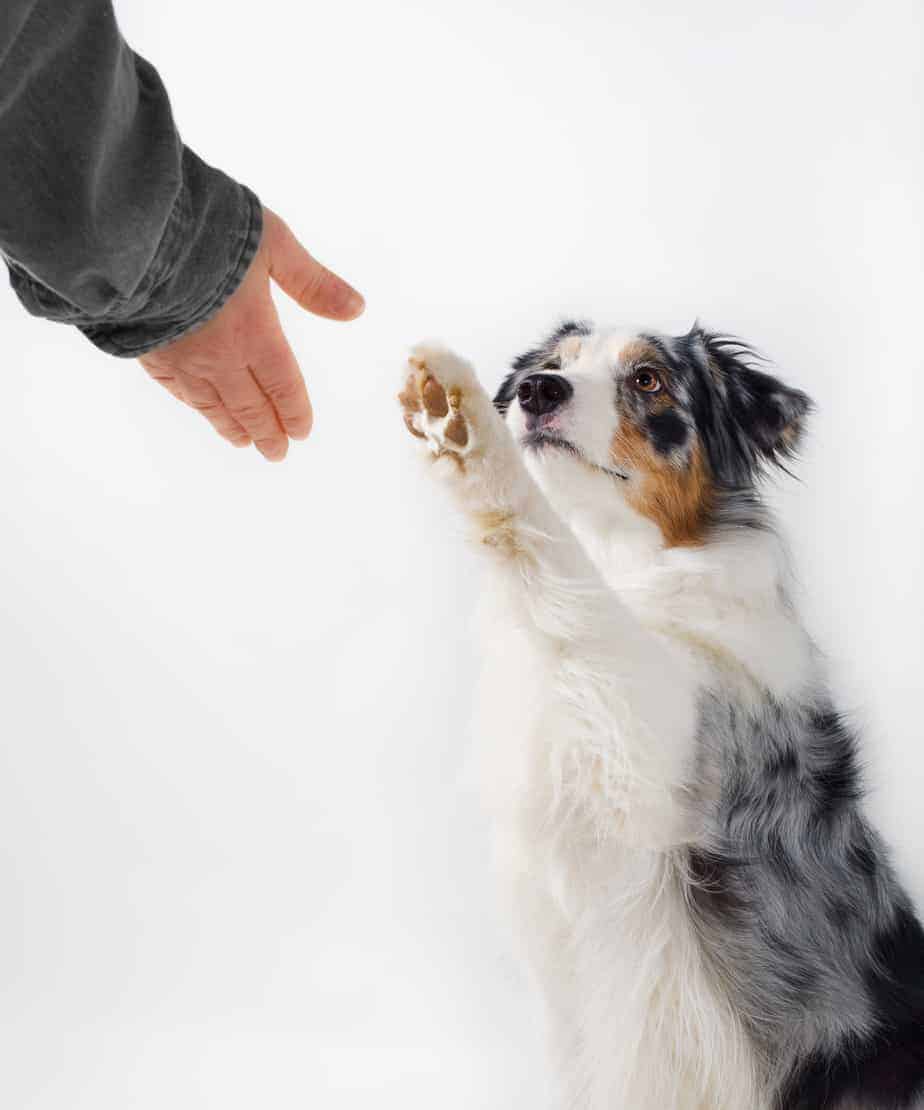
Dog owners wonder why dogs give their paws when they’re petted. Many dogs do this to show their affection.
Observe your pet’s canine body language.
Focusing lets you quickly learn what your dog’s body postures mean. Learn canine communication to better understand what your puppy or dog is trying to tell you.
People often wonder what pawing means and why dogs put their paws on them. The truth is, there are several reasons why our canine friends paw us.
To understand dogs, we must know their signals for communication and what they are trying to tell us.
Understand why dogs give their paws. Pawing is a natural and inherent way for dogs or puppies to communicate and demand that we “focus” on them so they can tell us what they need.
Depending on how often your dog resorts to this method, it can be an acceptable or annoying habit.
Pawing communicates, “Hey, you up there, it’s me down here. I want your attention, and I want it NOW!”
If you give your dog attention each time he puts his paws on or digs at you, you create a behavioral issue.
You don’t want to create a situation where your dog keeps pawing at you to get your attention.
If your dog is insistent, avoid eye contact. Teach your puppy or adult dog that behavior is unacceptable.
Knowing when and how to respond to or ignore dog pawing can prevent it from becoming problematic.
Recognize what pawing means
Dogs communicate in various ways, and pawing is one of their more expressive behaviors.
Understanding the type of pawing can help you interpret your dog’s feelings and intentions. Here are some common types of dog pawing behavior and what they may signify:
Attention-seeking
When a dog paws at you purposefully, it’s often a request for attention or interaction. This behavior might be accompanied by other cues, such as barking, whining, or nudging with their nose.
If your dog regularly paws at you while you’re busy, they may ask for playtime, a walk, or simply some affection.
Playful
During playtime, dogs may use their paws to engage with other dogs or humans. This pawing is usually light and playful, often seen in crouches or bouncing around excitedly.
Look for other signs of playfulness, such as wagging tails and play bows.
Submissive
Some dogs may paw at you slightly hesitantly, often combined with lowered body posture or avoidance of direct eye contact. This can indicate a submissive behavior, where the dog tries to show respect or deference.
It’s essential to respond gently, as this signals that they are feeling insecure and need reassurance.
Guidance or direction
If your dog paws at you while looking towards a door or its leash, it may be trying to communicate that it wants to go outside or is ready for a walk.
This type of pawing is typically persistent, as they will continue until you respond.
Anxiety or discomfort
In some cases, dogs may paw excessively as a response to anxiety or discomfort.
If you notice your dog pawing at themselves, the ground, or even your leg with signs of restlessness, pacing, or excessive licking, it could be a sign of stress.
Monitoring their environment and addressing any anxiety triggers can help alleviate their discomfort.
Exploratory
Dogs often use their paws to investigate their surroundings.
If your dog is pawing at a box, toy, or even a person, it might be attempting to explore or understand what it’s interacting with.
This behavior is typically gentle and curious, showing that your dog is engaging with its environment.
Train your dog to stop dog pawing
Start by keeping your dog’s nails trimmed.
Keep your dog’s nails short to prevent scratching and potential harm while you work on breaking this bad habit. This is better for the long-term health of your dog’s feet.
That’s especially important if you must stop a dog from pawing at your face.
Once you understand what your dog is trying to say, it’s easier to formulate a plan to correct or control the behavior. If your dog only comforts you sometimes, it’s best not to stop him from doing it.
Understand dog pawing behavior so you can create a behavior modification plan.
If your dog uses its paw or scratches you to get your attention, then you can work to modify that behavior.
Training tips to stop pawing
Excessive pawing in dogs can be frustrating and even dangerous.
While it may seem harmless initially, it can quickly escalate into scratching, digging, or even jumping on people.
But you can use tips to train your dog and eliminate the behavior.
Identify the cause
The first step in addressing excessive pawing is to identify its cause.
Is your dog trying to get your attention? Is it bored or anxious? Is it seeking food or treats? Is it feeding time? Is it simply a sign of boredom?
For example, your dog may seem to be holding its paws in a
Once you understand the root cause of their behavior, you can tailor your obedience training techniques accordingly.
Teach a “Quiet” command
One effective way to address excessive pawing is by teaching your dog a “quiet” command.
Start by saying “quiet” firmly when your dog starts pawing, and then reward them with a treat when they stop.
Gradually increase the duration between each reward until they stop pawing altogether.
Redirect their energy
Many dogs resort to excessive pawing as a way of releasing pent-up energy.
To address this, provide them with an outlet for their energy through regular exercise and playtime.
This will not only tire them out physically but also mentally stimulate them, reducing their need for attention-seeking behaviors like pawing.
You can get your dog to focus on other activities or dog tricks, like sitting, shaking, or rolling over. You can also put your dog into a stay position. Then, you can teach your dog a release word and get them to focus on your verbal command.
Practice desensitization
Some dogs learn that excessive pawing gets them what they want — food, attention, or access to something off-limits.
In these cases, desensitization can be an effective technique. You gradually expose your dog to triggers that usually result in pawing behavior and teach them more appropriate ways of communicating their needs.
Discourage unwanted behavior
It’s essential to discourage unwanted behaviors like excessive pawing immediately rather than reinforcing them unintentionally through attention or rewards.
Ignore your dog’s pawing. Only give them attention when calm, and keep all four paws on the ground.
Seek professional help
If your dog’s excessive pawing persists despite consistent training efforts, it’s essential to seek help from a professional dog trainer or behaviorist.
They can assess your dog’s behavior and provide personalized training techniques to address it effectively.
With patience, consistency, and positive reinforcement, excessive pawing in dogs can be addressed successfully.
Remember always to identify the root cause of the behavior and tailor your training techniques accordingly.
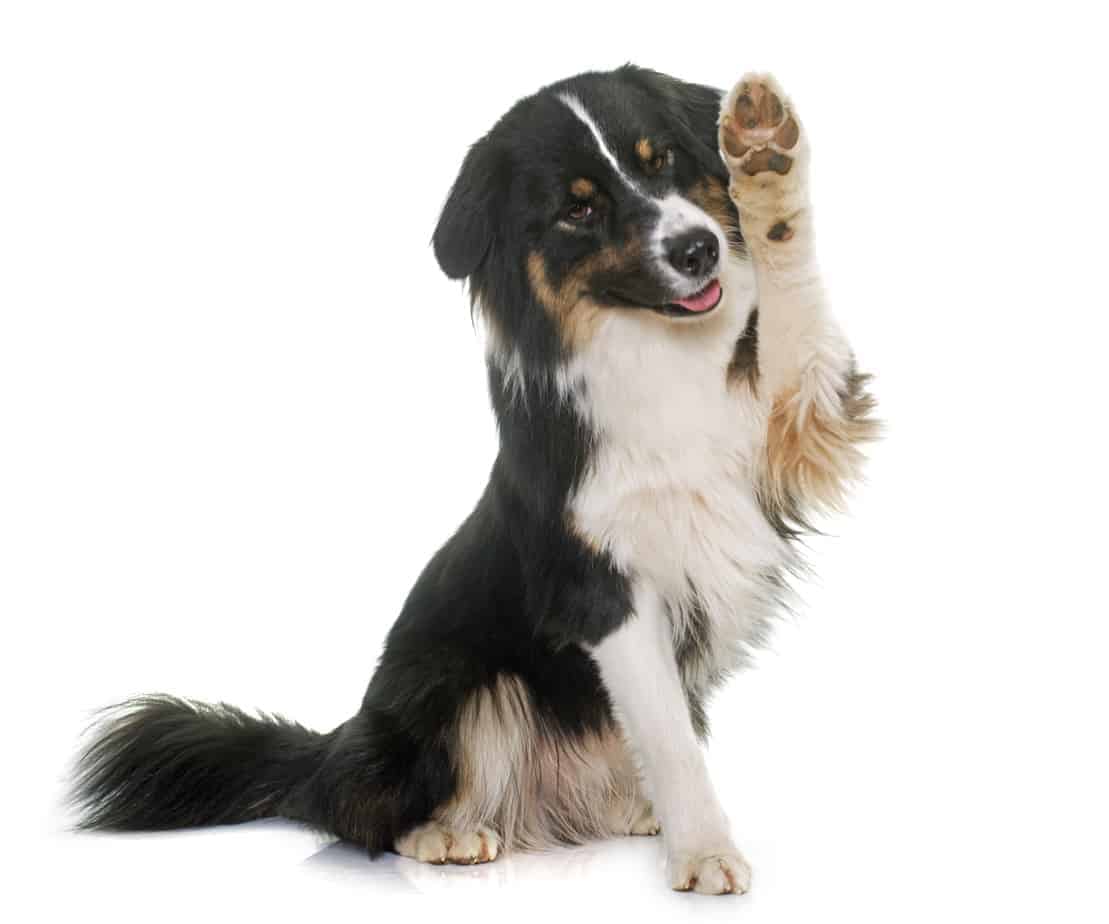
Use commands to stop bad behavior
When your dog paws at you, give your dog a “No” or “Stop” command.
When your dog sits calmly, reward him with a treat and lots of praise. If your dog has been pawing at you for a long time, you may need to repeat the process several times.
Pawing can also be an example of dominant behavior. If your dog continues to paw you and ignores your commands to stop, it may be trying to boss you around.
Try walking away from your dog or turning your back on him. Ignoring your dog will teach him that scratching you is unacceptable behavior.
Again, you may need to do this several times to teach your dog scratching you won’t get the result he wants.
Never yell at your dog or hit him. Negative attention could reinforce bad behavior or make your dog fearful and potentially aggressive.
If your dog scratches at the door as a signal that he wants to go outside, you’ll have to decide whether you wish to continue using that method.
If you eliminate all scratching, you can teach your dog to ring a bell to let you know he needs to go out. You could also train your dog to give one short bark as an alert.
Some people even install a dog door so their pets can go outside independently.
Focus on positive reinforcement
When training your dog to stop pawing, it’s important to incorporate positive reinforcement techniques.
One effective method is to reward your dog with treats or praise when it refrains from pawing and instead displays calm behavior.
You can redirect their attention by giving them a toy to play with or asking them to perform a different behavior and rewarding them.
Consistency and patience are essential when using positive reinforcement to modify your dog’s behavior.
Dogs that love to paw (and dig)
Just as some people are more prone to using hand gestures when talking, some dog breeds are likelier to use their paws. Some dogs wave their front paws, while others cross their front paws or look like they are putting their paws together in prayer.
When dogs put their paws together as if to pray, they often seek treats or food.
Dogs also tend to favor one paw over the other, just like humans do. The majority of animals are right-handers. Some are left-handers. Quite a few pups are ambidextrous or use both paws equally.
Breeds likely to use their paws to communicate are also more prone to digging.
Dog breeds that use their paws often include boxers, dachshunds, terriers, beagles, miniature schnauzers, Siberian Huskies, Alaskan Malamutes, and Australian shepherds.
Prevent excessive pawing
Excessive pawing can be frustrating for dog owners, but understanding the reasons behind it and applying some strategies can help curb this tendency.
Here are some effective tips to manage and reduce excessive pawing:
Identify triggers
Pay attention to what prompts your dog to paw. It could be boredom, anxiety, seeking attention, or a desire to play. Understanding the cause will help you tailor your approach.
Provide mental and physical stimulation
Boredom can lead to excessive pawing. To keep your dog engaged, ensure it gets plenty of exercise and mental challenges.
Puzzle toys, training sessions, and regular walks can help.
Teach alternative behaviors
Train your dog to perform a different behavior instead of pawing. For instance, you can teach them to “shake” or “give a high five” on cue, satisfying their need to interact without excessive pawing.
Reward calm behavior
Reward your dog when it behaves calmly or gently. Treats or praise can create positive associations with calm behavior.
Create a calm environment
If anxiety is a trigger, try to identify sources of stress and reduce them. Provide a safe space for your dog to retreat when feeling overwhelmed.
Consistent training
Use consistent commands and training techniques to reinforce good behavior. Consistency helps dogs understand what is expected of them.
Bottom line on excessive pawing
Observe your dog’s body language. If you learn to understand dog mannerisms, you will better understand what your puppy or dog is trying to tell you.
By becoming bilingual in your dog’s language, you can effectively control their actions and train them to stop excessive pawing before it escalates into a severe behavioral issue.
Your dog will surely be impressed with your skills.
Karen A. Soukiasian owns Good Dog! — Dog Training in St. Augustine, Florida. You can follow Karen on Facebook.