
Rev up outdoor fun: Discover the 8 best dog breeds for camping
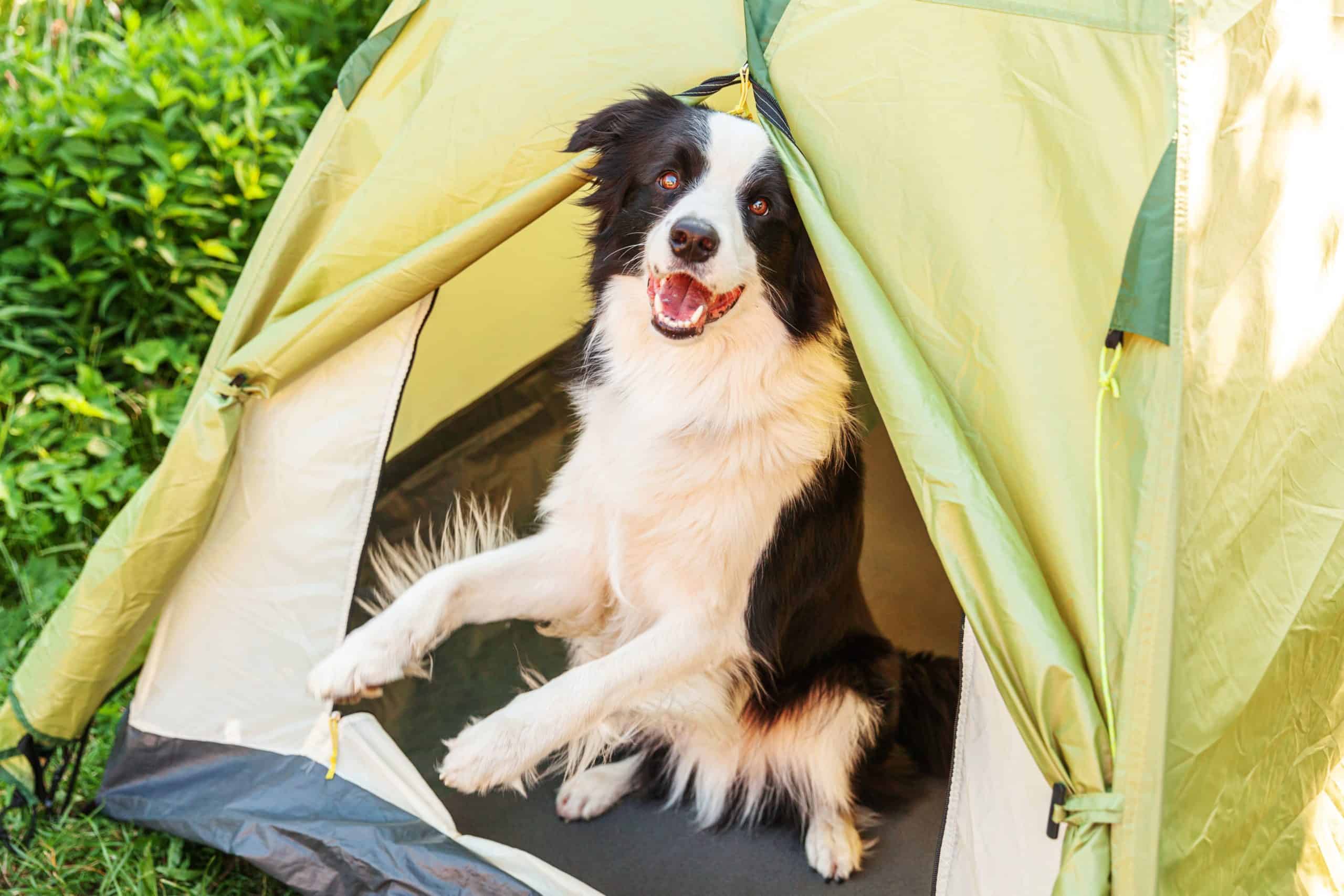
Camping with your dog?
That’s the good life. Fresh air, new smells, and your best friend by your side. But here’s the thing: not every dog is built for the backcountry.
Take the wrong pup on the wrong trail, and you’ll end up carrying a 100-pound dog back to the trailhead. Not ideal.
Every dog is an individual. Breed tendencies are a starting point, not a guarantee.
But if you want a general roadmap for which dogs tend to thrive outdoors, keep reading.
We’ll also cover which pups might be better off snoozing on the sofa with a pet sitter.
Backpacking vs. car camping
- Backpacking vs. car camping
- Why take your dog camping?
- 8 best dog breeds to take on a camping adventure
- Dogs you might want to leave at home
- Dog camping gear
- Nutrition and hydration tips for active dogs outdoors
- Training tips for taking your dog camping
- Dealing with unexpected challenges on the trail
- Safety tips for taking dogs camping
- Introduce your dog to camping
- Dog-friendly camping activities
- Bring multiple dogs
- Choose dog-friendly camping spots
- Eco-friendly camping with your dog
- Key takeaways
These two aren’t the same thing, and that matters a lot for your dog.
Backpacking means your dog has to hike to your campsite, sleep in a lightweight tent, and keep going for days. They need stamina, a manageable size, and solid training.
Car camping? Way more relaxed.
You can pack a cozy bed, extra food, and all the comforts of home.
Don’t stress too much about breed if you’re car camping.
Chihuahuas, Pugs, Shepherds, and Border Collies all have a blast at registered campsites. Just check in advance that your campground welcomes dogs.
Why take your dog camping?
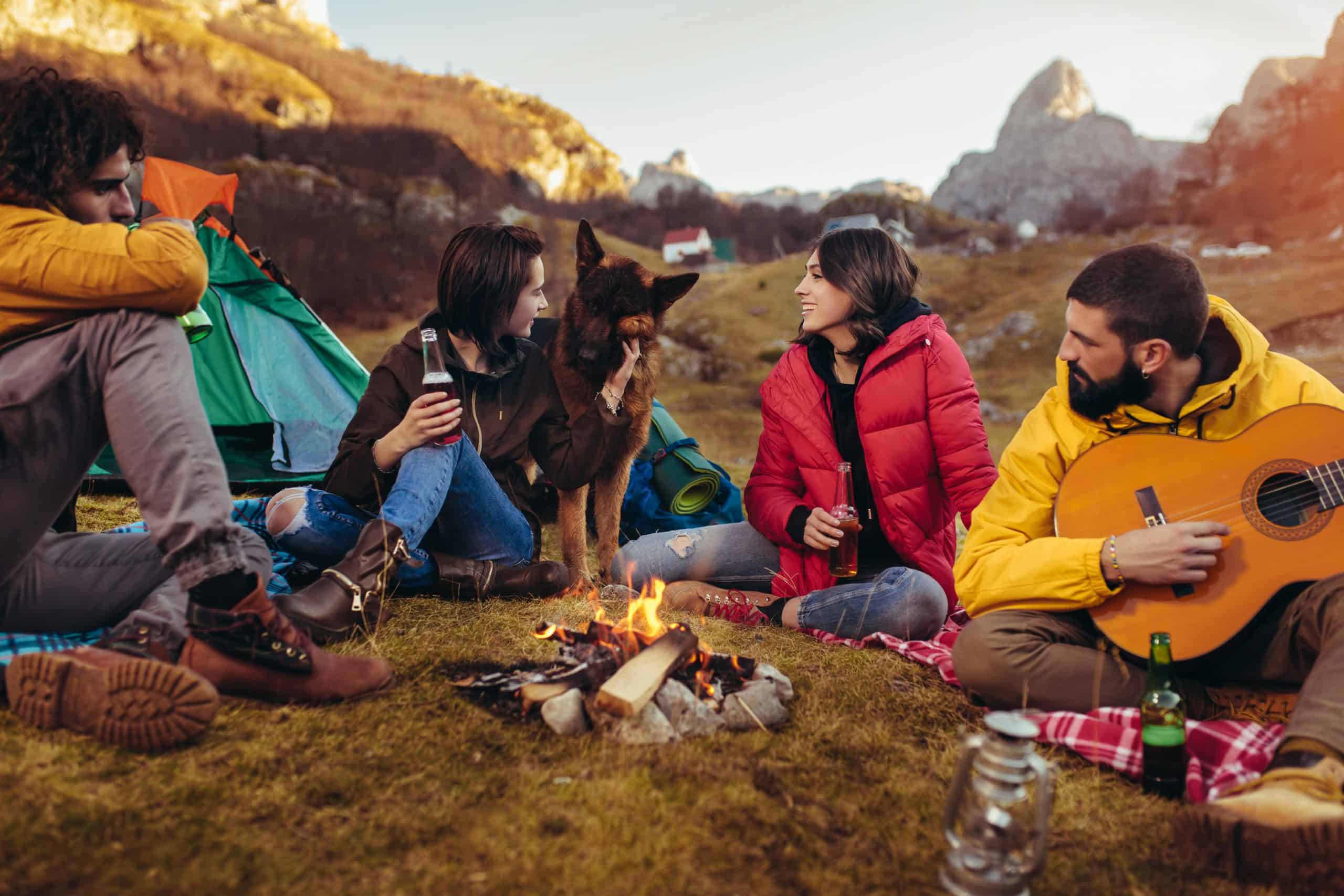
Because it’s a blast, that’s the short answer.
But there are a few deeper reasons too.
Mental stimulation
Long hikes aren’t just exercise. They’re a full mental workout.
A high-energy dog like a Border Collie needs new environments, new scents, and new challenges.
Regular adventures can mellow out even the most wired dog and reduce boredom-triggered behavior problems.
Resilience
Routine is comfortable, but it can make dogs rigid.
Shaking things up, even with a one-night camp, builds a dog that can roll with life’s surprises.
Start small. A longer walk here, a night in the yard there. Build up to the big adventure gradually.
Safety
Solo hikers know this feeling: your dog is one of the best deterrents out there.
Even the friendliest, sloppiest, most tail-wagging pup can make strangers think twice before approaching.
Inclusion
Some dogs struggle hard with being left behind.
Dogs are pack animals. Being alone cuts against their instincts.
If you make it a point not to leave your dog solo, adventures together make sense.
8 best dog breeds to take on a camping adventure
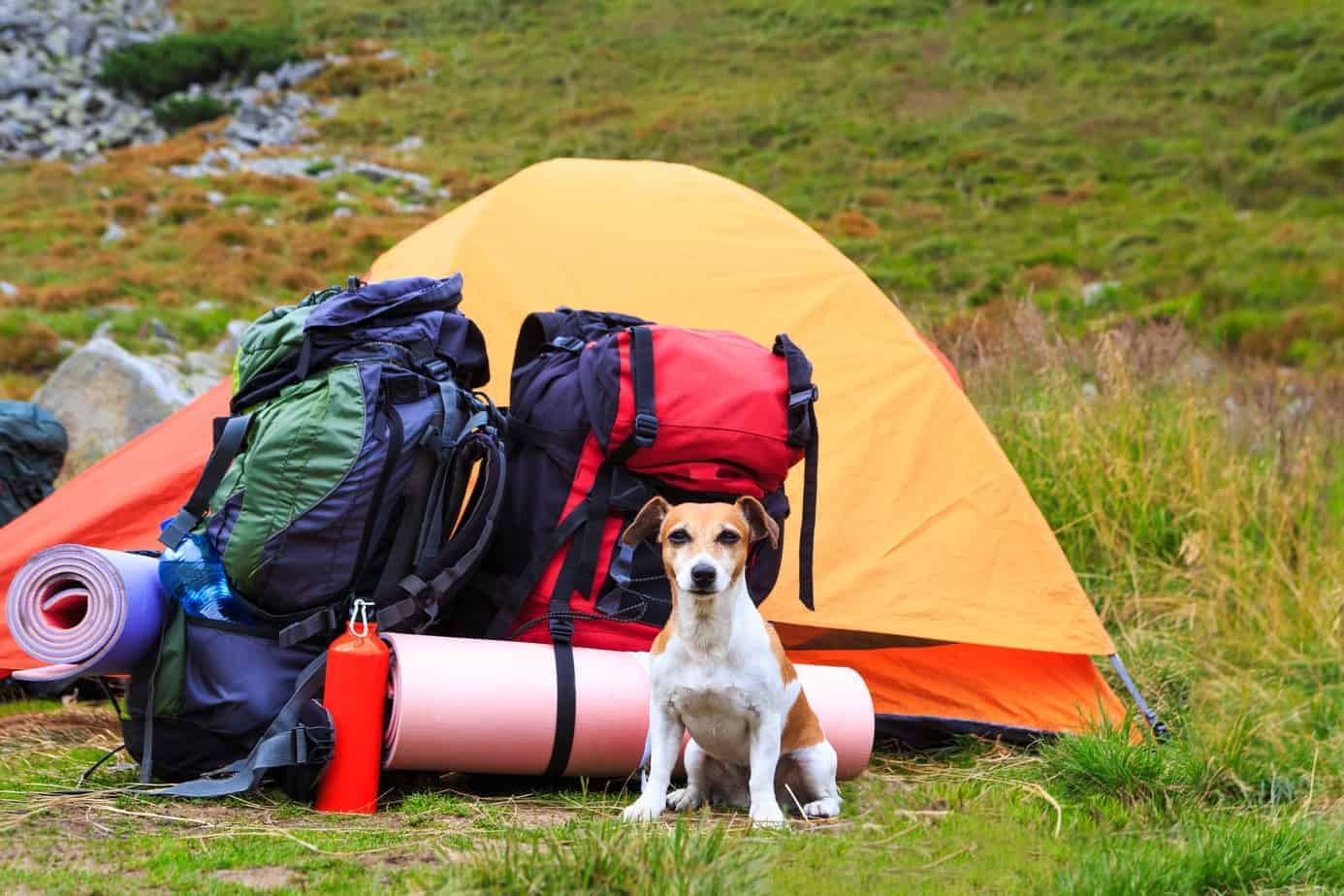
The ideal camping dog tends to be:
- Curious and confident, since timid dogs can find the outdoors overwhelming
- High-energy, or at least fit enough for the hike
- Obedient with reliable recall, or comfortable on a leash
- Small enough to share your tent (or you’re happy to spoon)
- Hardy enough to handle the weather
1. Border Collie
Border Collies are athletes with brains. They need a job.
Underchallenged Border Collies can get snappy, so hiking provides the outlet they crave.
They’re not too big, and they’re famously trainable. One heads-up: keep them leashed near livestock.
That herding instinct kicks in hard. Australian Shepherds share a lot of these traits and are also brilliant trail companions, though they run a touch bigger.
2. Siberian Husky
Winter camping? Huskies were born for it.
Snow, ice, cold? They love it.
And those long miles on the trail are exactly what this high-energy breed needs.
The catch: most Huskies are serious escape artists.
Keep them leashed. You don’t want to chase one across a mountainside with a full pack on your back.
Alaskan Malamutes are similar but bigger, so budget more tent space.
3. Jack Russell Terrier
Small but mighty. Jack Russells punch way above their weight on the trail.
They’re athletic, smart, loving, and brave enough to dive into new adventures without hesitation.
Their little legs might tire on a brutal hike, but they’re light enough to tuck into your pack when that happens.
4. German Shepard
German Shepherds are fiercely loyal and smart as a whip.
They’ll love being included in your trip and take the job of campsite guardian seriously.
They do have a strong prey drive, so keep that in mind around wildlife.
But as a trail companion and tent-mate? Hard to beat.
5. Irish Setter
Friendly, energetic, and built for endurance.
Irish Setters were bred as hunting dogs, which means they’ve got the stamina to hike all day and the drive to stay curious.
Watch them around wildlife, but give them the miles and they’ll reward you with sheer joy on the trail.
6. Border Terrier
Don’t let the small frame fool you.
Border Terriers are tough, weatherproof, and totally undaunted by rough conditions.
They’re more trainable than most terriers and just the right size to squeeze into your sleeping bag on a cold night.
That said, they’ve got a strong chasing instinct and surprising speed, so recall training is a must.
7. Labrador Retriever
Labs hit the sweet spot: big enough to hike for miles, small enough not to swallow the tent, and eager enough actually to listen to you out on the trail.
They’re mellow, kind, and sturdy.
They’ll protect you without turning into full-time security guards. A Lab on a camping trip is pure happiness.
8. Mutt
Don’t sleep on mixed-breed dogs.
A varied gene pool often means better health, sharper instincts, and a more adaptable temperament.
Mutts haven’t been selectively bred for a single extreme trait, which often makes them resilient all-rounders.
Your rescue mutt might be the best camping dog you’ve ever had.
Dogs you might want to leave at home

No breed is categorically off the camping list. But here are a few things to think about.
Fitness and energy: A Chihuahua might conk out halfway up the trail, but they’re small enough to carry. A 125-pound Great Dane with no trail fitness? That’s a much harder problem to solve.
Protective instincts: Highly protective breeds like Malinois can find camping exhausting. They’ll stay alert all night listening for threats, and the experience can stress them out rather than enrich them.
Health issues: Dogs with arthritis can have a severe flare-up after a long hike. Flat-faced breeds like Pugs and Boxers can struggle to breathe on strenuous climbs. Know your dog’s limits before you plan a big adventure.
Dog camping gear
The right gear makes everything smoother and safer.
First aid kit: Stock it with antiseptic wipes, bandages, tweezers, and any medications your dog needs.
Collapsible bowls: Lightweight and easy to pack. Essential for keeping your dog fed and hydrated on the go.
Dog tent or waterproof bed: Keeps them off cold ground and gives them a secure, comfortable spot to rest.
Reflective collar and leash: Critical for nighttime visibility. A harness is worth considering too, since it protects the neck from pulling.
Dog-safe insect repellent: Ask your vet for a recommendation. Human repellents can be toxic to dogs.
Paw protection: Boots or paw wax guard against hot asphalt, sharp rocks, and rough terrain.

Packing checklist for dog camping trips
Print this out and stick it in your camping bag. You’ll thank yourself later.
Food and water
- Dog food (pre-portioned for trip length, plus a little extra)
- Portable water filter or extra water supply
- Collapsible food and water bowls
- High-energy trail snacks and treats
Safety and health
- Leash (and backup leash)
- Waste bags and poop scooper
- Dog first aid kit
- Tick remover tool
Comfort and gear
- Dog-safe insect repellent
- Dog boots or paw wax
- Dog coat or insulating layer
- Waterproof dog bed or sleeping pad
- Comfort toy or familiar item from home
- Reflective collar with ID tags
Nutrition and hydration tips for active dogs outdoors
More miles mean more fuel. Here’s how to keep your dog energized and hydrated on the trail.
Calories: Active dogs burn significantly more calories on the trail than at home. Consider increasing portions by 25-50% on high-activity days, or bring high-calorie, protein-rich snacks like freeze-dried meat treats or specially formulated trail kibble.
Hydration: Dogs don’t sweat the way we do. They regulate their temperature through panting, which quickly burns water. Offer water every 15-30 minutes on the trail. If you’re filtering water from natural sources, make sure your filter works for dogs too.
Electrolytes: Yes, dogs can benefit from electrolytes on hot days or intense hikes. Ask your vet about dog-specific electrolyte supplements. Don’t use human sports drinks since many contain xylitol, which is toxic to dogs.
Food transitions: Don’t switch your dog’s food right before a big trip. Sudden changes cause digestive upset. If you’re planning to use a high-energy trail food, transition gradually over 7-10 days before you leave.
Rest and digest: Give your dog at least 30 minutes after eating before hitting the trail. Hiking on a full stomach increases the risk of bloat, especially in deep-chested breeds like German Shepherds and Labs.
Training tips for taking your dog camping
A little prep goes a long way.
- Recall training: Solid recall is non-negotiable before any off-leash adventure. Practice in increasingly distracting environments until it’s bulletproof.
- Leash manners: Even if your campsite allows off-leash dogs, loose-leash walking is a lifesaver on narrow trails with other hikers.
- Gear desensitization: Let your dog sniff and explore tents, sleeping bags, and packs well before the trip. Pair camping gear with treats and good vibes so they associate it with positive things.
- Basic obedience: Sit, stay, and down are trail essentials. You’ll use them at stream crossings, around other campers, and whenever wildlife appears.
- Leave-no-trace habits: Train your dog to stay on the trail, leave wildlife alone, and wait patiently while you clean up after them.
Dealing with unexpected challenges on the trail
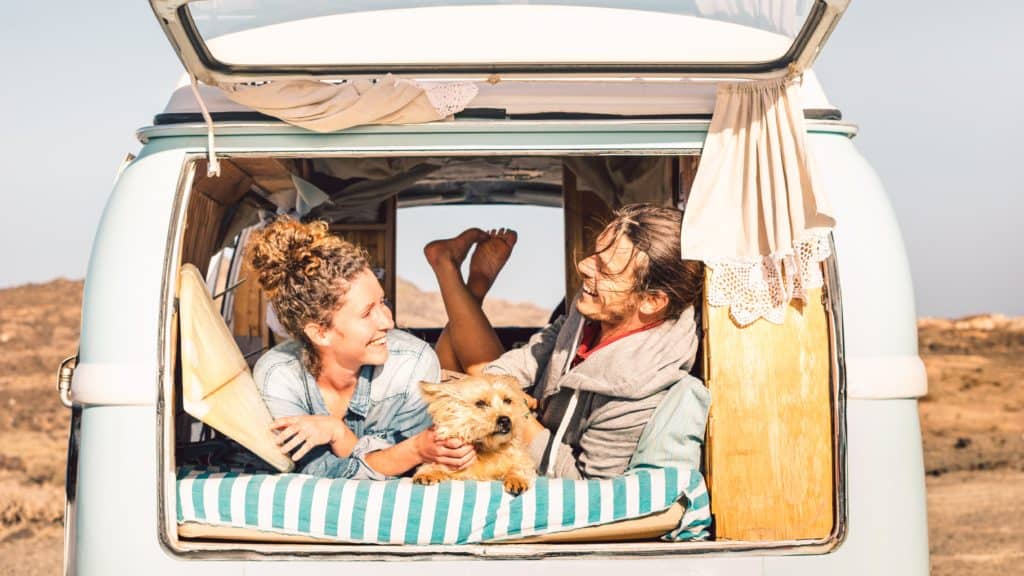
Even well-prepared trips throw curveballs. Here’s how to handle the most common ones.
Dog anxiety around wildlife: If your dog spots a deer, bear, or coyote and loses it, calmly redirect their attention to you with a treat or command. Don’t panic, since dogs mirror our energy. Practice wildlife desensitization before your trip by exposing them to sights, sounds, and smells of nature in controlled settings.
Ticks and insect bites: Check your dog head to tail after every hike, especially around ears, paws, and belly. Use fine-tipped tweezers to remove ticks by grasping them close to the skin and pulling straight out. Watch for signs of a reaction, such as swelling, limping, or lethargy, in the days that follow, and contact your vet if anything looks off.
If your dog wanders off: This is every camper’s nightmare. Prevent it by keeping your dog leashed or within eyeline at all times. If they do get lost, stay calm, call their name in a steady voice, and retrace your steps. Make sure their collar tags and microchip information are up to date before you leave home. A GPS tracker on their collar is worth every penny for escape-prone dogs.
Safety tips for taking dogs camping
Keep these in your back pocket.
Identification: Current ID tags plus a microchip. Both.
First aid kit: Gauze, bandages, antiseptic, tweezers, and any prescription medications.
Weather: Know what conditions you’re heading into. Make sure your dog has shelter and appropriate gear for the temperature.
Insect prevention: Use vet-recommended preventatives and perform full-body checks after every hike.
Water safety: If your dog will be swimming, watch for strong currents. A dog life jacket is smart for rough water.
Campsite security: Use a portable pen or tie-out if your dog tends to roam.
Wildlife awareness: Keep your dog leashed in areas with bears, snakes, or other wildlife. Store food securely to avoid attracting animals to camp.
Pre-trip vet check: Make sure vaccinations are up to date, and your dog is fit enough for the planned activity level.
Introduce your dog to camping
Introducing your dog to camping can be a rewarding experience for both you and your furry friend.
Here are some steps to ensure a smooth transition into the great outdoors:
Prepare your dog
Health check: Before heading out, ensure your dog is healthy and up to date on vaccinations. A visit to the vet can help address any concerns and discuss flea and tick prevention.
Basic training: Familiarize your dog with basic commands such as “sit,” “stay,” and “come.” This will help manage your dog in unfamiliar environments.
Select the right gear
Leash and collar: Use a sturdy, adjustable leash and ensure your dog’s collar has identification tags. A harness may provide extra control if your dog tends to pull.
Camping gear: Consider getting a portable dog bed, food and water bowls, and toys. A dog pack can also help carry their belongings.
Practice short trips
Start with short outings in familiar environments, such as a local park or a backyard campout.
This allows your dog to adapt to being outdoors and helps build enthusiasm for longer trips.
Choose dog-friendly campsites
Research campsites that allow dogs and check their specific policies. Look for places with dog-friendly hikes, ample space, and minimal wildlife distractions.
Introduce new experiences gradually
Gradually expose your dog to camping elements such as tents, sleeping bags, and campfires.
Allow them to explore these items at home so they feel comfortable with the sights and smells.
Monitor behavior
During your camping trip, keep an eye on your dog’s behavior and gradually introduce them to new sounds and sights.
Ensure they feel safe, and be attentive to their comfort levels.
Pack essentials for your dog
Bring enough food, water, and treats for the duration of your trip. Don’t forget to pack a first aid kit specifically for pets, including items like bandages and antiseptic wipes.
Stay active and engaged
Plan activities that let your dog explore and burn off energy, such as hiking, swimming, or playing fetch.
This helps keep them happy and occupied while you unwind.
Safety first
Always supervise your dog, especially around water and campfires. Ensure they are leashed when necessary and never leave them unattended.
Return home and reflect
Once your adventure is over, take some time to evaluate your dog’s experience. Note what they enjoyed and any challenges you faced to make future trips even better.
Dog-friendly camping activities
Camping can be an incredible bonding experience for you and your dog, with plenty of activities to make your trip memorable for both of you.
Here are some fun dog-friendly ideas to keep your furry friend engaged and happy while enjoying the great outdoors:
Nature hikes
Explore the trails around your campsite with your dog. Hiking is a fantastic way for both of you to get exercise, and dogs love the new scents and sights. Make sure to find dog-friendly trails and keep your pup on a leash when required.
Fetch
Nothing beats a classic game of fetch! Bring along a lightweight ball, frisbee, or even a stick to toss for your dog. Look for open areas where they can run freely and enjoy the thrill of the chase.
Agility courses
If you want to add a little challenge, set up a makeshift agility course using items you have on hand, like camping chairs, logs, or ropes. Teach your dog to navigate through the course for a fun exercise that stimulates their mind and body.
Water games
If your campsite is near a lake or river, your dog will likely love splashing around. Bring a floating toy or a stick for them to retrieve. Always supervise them closely around water and ensure the area is safe for swimming.
Scent work
Engage your dog’s instincts by hiding treats or toys around your campsite and letting them sniff them out. This can be a great way to mentally stimulate your dog and keep them engaged while you relax.
Camping tricks
Use the camping trip as an opportunity to teach your dog new tricks. Whether it’s learning to sit on command or mastering a new agility trick, practicing in a new environment can be both fun and rewarding.
Picnics
Plan a dog-friendly picnic where both you and your dog can enjoy tasty treats. Bring along their favorite dog snacks and find a cozy spot to relax together. This is a great way to take a break and enjoy the scenery.
Stargazing
Set up your camp chairs and enjoy the night sky with your dog by your side. Dogs often love to snuggle up and relax after a day of activities, making stargazing a beautiful way to wind down together.
Safety first
While enjoying these activities, always be mindful of your dog’s comfort and safety. Ensure they have plenty of water, access to shade, and monitor their energy levels.
Remember to bring their leash, waste bags, and any necessary gear, such as dog boots for rough terrain.
Bring multiple dogs
Camping with multiple dogs can be a rewarding experience, but it also comes with its own set of challenges.
Here are some tips to help ensure a fun and safe trip for both you and your furry friends:
Choose a dog-friendly campsite
Before you set out, make sure the campsite is pet-friendly and has adequate space for your dogs to roam. Look for areas with designated dog paths, trails, and access to water.
Plan for safety
Bring collars with identification tags for each dog, and consider microchipping them as an extra precaution. Familiarize yourself with the local wildlife and potential hazards, and keep your dogs leashed, especially in unfamiliar areas.
Pack essential supplies
Bring a dedicated bag for your dogs that includes food, water, bowls, leashes, waste bags, toys, and any medications they might need. Don’t forget their bedding or a comfortable spot to rest.
Establish a routine
Stick to a schedule for feeding, walks, and playtime to give your dogs a sense of normalcy. Consistency can help reduce anxiety, especially in a new environment.
Socialize and supervise
If your dogs are social, they may enjoy meeting other dogs at the campsite. However, always supervise them during interactions to ensure they’re comfortable and safe.
Keep them active
Plan activities that allow for physical activity and mental stimulation, such as hiking, fetch, or agility games. This can prevent boredom and help burn off excess energy.
Manage temperature and hydration
Always provide plenty of water, especially in warm weather. Be attentive to your dogs’ needs and monitor for signs of overheating, such as excessive panting or drooling.
Designate ‘quiet time’
Multiple dogs can lead to excitement and noise, which may disturb other campers. Set aside some quiet time in your tent or camper where everyone can relax.
Respect other campers
Be mindful of your surroundings and ensure your dogs are not bothering other campers. Clean up after them consistently to maintain a positive camping experience for everyone.
Know your dogs’ limits
Pay attention to how each dog is handling the adventure. Some dogs may thrive while others may feel overwhelmed. Be willing to adjust your plans to cater to their comfort and well-being.
Choose dog-friendly camping spots
When planning a camping trip with your furry friend, selecting dog-friendly destinations can enhance the experience for both of you.
Here are some great options to consider:
Acadia National Park, Maine
This stunning national park welcomes leashed dogs on many of its trails and throughout campgrounds. With beautiful coastal landscapes, rocky beaches, and panoramic views from Cadillac Mountain, your pup will enjoy exploring this versatile terrain.
Great Smoky Mountains National Park, Tennessee/North Carolina
While dogs are not allowed on most trails, the park has specific pet-friendly areas, including campgrounds and a few walking paths, like the Gatlinburg Trail and the Oconaluftee River Trail. You can enjoy gorgeous mountain views and fresh air while spending time with your four-legged companion.
Joshua Tree National Park, California
This unique park allows dogs on paved roads and in campgrounds. While the rock formations, desert scenery, and hiking experiences are breathtaking, be sure to keep your dog leashed and hydrated as temperatures can rise quickly.
Custer State Park, South Dakota
Known for its stunning natural beauty and diverse wildlife, Custer State Park offers a variety of trails and camping options that welcome dogs. Enjoy hiking and the chance to spot bison, deer, and other wildlife alongside your canine companion.
Lakeside State Park, New York
If you’re looking for a camping experience combined with water activities, Lakeside State Park is a fantastic choice. Dogs are allowed on leashes throughout the park, and your pup can enjoy the warm sun and water activities by the lake.
Olympic National Park, Washington
This diverse landscape offers a range of environments, from mountains to rainforests to coastal areas. Only specific trails and campgrounds are dog-friendly, but the park’s natural beauty makes it worth the visit. Just be sure to check pet regulations before heading out.
Shenandoah National Park, Virginia
With over 200,000 acres of protected lands, Shenandoah features beautiful vistas along Skyline Drive, as well as select dog-friendly trails. Dogs are welcome in campgrounds, provided they are leashed and their owners clean up after them.
Dog-friendly RV Parks
If you prefer the comforts of an RV, many RV parks across the country are pet-friendly, offering amenities like dog runs and pet-friendly events. Look for parks with grassy areas and nearby trails for walks with your pup.
Eco-friendly camping with your dog
You love the outdoors. Here’s how to make sure it loves you back.
Stay on trail: Off-trail dogs can trample fragile vegetation and disturb wildlife habitat. Keep your dog on marked paths, especially in sensitive ecosystems.
Manage waste responsibly: Pack it in, pack it out. Dog waste left on the trail contaminates waterways and harms local wildlife. Always carry waste bags and a scooper. Bury waste at least 200 feet from water sources if you’re deep in the backcountry.
Don’t disturb wildlife: A dog running at a bird’s nest or chasing a deer isn’t just bad training; it’s genuinely harmful to local ecosystems. Keep your dog leashed in wildlife-heavy areas, especially during nesting season.
Use eco-friendly products: Choose biodegradable waste bags and dog-safe, environmentally friendly insect repellent and sunscreen. What goes on your dog can end up in the trail environment.
Leave it as you found it: This is the core of Leave No Trace. Your dog’s adventure shouldn’t come at the expense of the place you’re exploring.
Key takeaways
Dogs are individuals first, breeds second. Temperament and training matter more than pedigree. For car camping, almost any dog can have a great time as long as they’re not anxious or reactive around strangers.
For backpacking, think it through a bit more. Start small. Build up. And when you find the right adventure rhythm with your dog? There’s nothing better.
The trail’s waiting. Get it.
Rachel Horne is a freelance writer and journalist. When she isn’t writing about camping for publications like The Camper Lifestyle, she’s exploring the great outdoors with her rescue pup, Pirate. She hasn’t convinced him with Wild Swimming yet, but he’ll happily watch from the shore while she dives into the mountain lakes.